
Strategic Facility Planning in Healthcare Construction
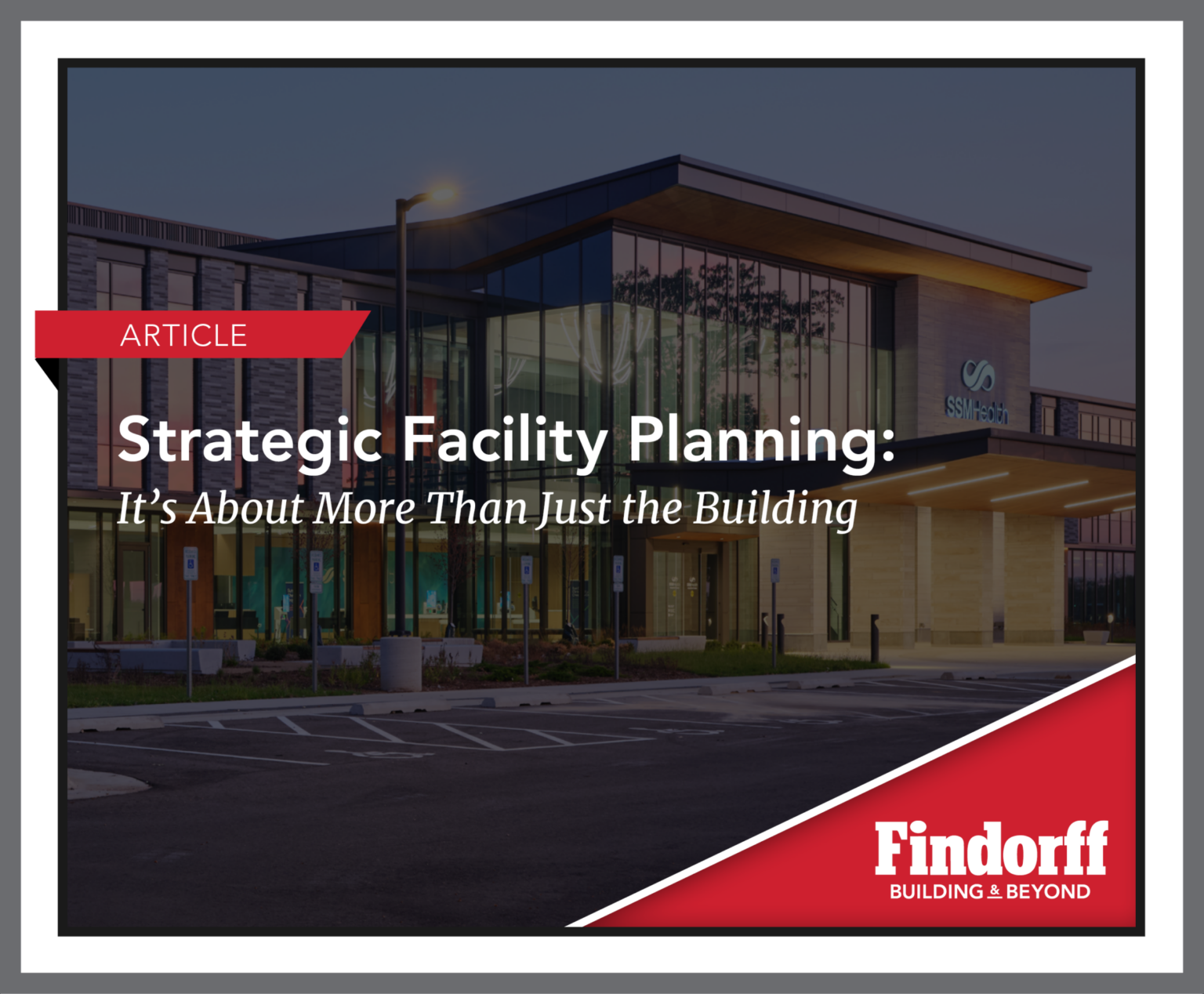
This article was originally published on August 4, 2026, and can be found on the ACHE-WI website here.
Healthcare is a tough business. Margins are tight, labor costs are high, reimbursement is uncertain, and competition for patients and providers remains intense.
Managing all these factors (and more!), many organizations delay infrastructure upgrades, maintenance projects, and smaller capital improvements — sometimes to manage short-term costs, and sometimes because larger facility projects may be on the horizon. While understandable, the cost of waiting often compounds quickly.
Strategic facility planning is about the patient, not the building.
Deferring small facility investments today frequently leads to larger, more disruptive, and more expensive failures tomorrow. Even if a “bigger fix” seems just around the corner, the highly complex nature of healthcare spaces and the dramatic impact of down time in infrastructure makes reliability essential to patient care.
Aging HVAC systems can compromise infection prevention and environmental controls. Electrical failures can disrupt critical equipment and operations. Plumbing issues, water intrusion, or failing life safety systems create risks for patients — as well as for staff and visitors.
Unlike other industries, facility failures in healthcare can immediately affect care delivery. Procedures may be delayed, patient rooms closed, or departments temporarily disrupted. With rigorous regulatory expectations around life safety, ventilation, emergency preparedness, and environmental conditions, the facilities themselves truly are direct patient care concerns. Effective planning leads to crisis avoidance and avoids crisis management!
It’s about provider retention, not the building.
Healthcare organizations are competing aggressively for physicians, nurses, and clinical staff. The physical environment increasingly influences where providers choose to work — and whether they stay.
Recurring maintenance problems, outdated clinical spaces, unreliable temperature control, and operational disruptions create frustration for already strained care teams. Providers want environments where they can deliver care efficiently and confidently. Modern, reliable facilities support morale, workflow, and retention.
In today’s labor market, the condition of the physical environment has become part of the workplace value proposition. And as providers are learning more innovative and advanced ways to deliver care, they – and their patients – need facilities that can keep up.
It’s about best ROI on any building investment.
Deferred maintenance rarely saves money long term. Small issues become larger capital problems. Emergency repairs cost more than planned replacements. Operational disruptions reduce throughput, interrupt revenue, and create unbudgeted expenses.
Healthcare organizations also face indirect costs:
- Lost revenue from disrupted operations
- Increased energy and maintenance costs
- Compliance-related remediation
- Higher operational risk
- Damage to patient confidence and reputation
The question is not whether organizations should invest in short-term needs or long-term initiatives. Healthcare systems need both, and strategic guidance is essential to balancing immediate operational priorities with long-term capital planning.
It’s about strategic facility advice, not just the construction.
Most healthcare leaders already know their buildings have vulnerabilities. The challenge is determining what to prioritize, when to act, and how to align limited capital with operational risk. These decisions also should be considered against long-term campus and facility-wide maintenance and replacement plans.
Strategic facility guidance helps organizations move from reactive decision-making to proactive planning. The key is relationship-based connection and discussion that provides objective facility assessments, capital planning guidance, and risk-based prioritization that help leadership teams make smarter long-term decisions.
In today’s healthcare environment, facility strategy is inseparable from organizational strategy. Organizations that proactively address infrastructure challenges position themselves to operate more safely, efficiently, and competitively. Strategic planning conversations today can help avoid costly disruptions tomorrow.
Our healthcare team has the expert guidance needed to strategically plan for the future. Connect with us if you have any questions — we are passionate about helping healthcare leaders align their mission with their facilities and setting patients and staff up for success.