
Facility Planning for Progress: A Story of Two Rural School Districts
This article was originally published in the October 2025 edition of Wisconsin School News.
The realities facing rural Wisconsin school districts are challenging. Some need millions of dollars in improvements across multiple facilities. Others haven’t passed a capital referendum in decades. Low enrollment levels can leave school boards with urgent infrastructure needs and inadequate budgets to fund them. But with careful strategic planning and thoughtful community outreach, these challenges can be successfully overcome.
Early starts = Better results
For rural school districts, facilities maintenance and improvements can present unique opportunities. Aging infrastructure, fluctuating enrollment, and leadership transitions can all complicate long-term planning. Building awareness, particularly among residents without direct ties to school districts, can be another tricky task. Tight budgets linked to enrollment levels further complicate matters, requiring school boards to invest wisely in only the most effective tactics.
To overcome these obstacles, school boards must embark on careful, long-term planning early in the process. That means starting preliminary assessments 12-24 months before a potential referendum date.
The school districts of Westfield and Jefferson offer incredible examples of successful community outreach campaigns. By carefully developing data assessments and smart communication strategies, launching key partnerships and planning leadership transitions, these districts were well positioned for successful outcomes.
Westfield: A comeback story
Tucked away in pastoral Marquette County, the School District of Westfield faced a daunting challenge. Its facilities were in such a deteriorated state that its long-time property insurance provider declined to renew coverage. Leaks in the high school’s plumbing were costing millions in emergency repairs. Large systems like HVAC units, boilers, and water softeners were failing across multiple schools. Without funding, the future looked bleak.
The district faced a second big hurdle: Westfield hadn’t passed a referendum in 30 years. Adding to that, both the district administrator and business manager were transitioning out of their positions.
With a total enrollment of 1,000 students, a limited budget and a vast community spanning 22 municipalities, how would Westfield leaders manage to build trust, raise awareness, and mobilize community support to meet the district’s funding needs?
Westfield’s journey began two years before holding a referendum. By starting the planning process far in advance, they set themselves up for success. In 2022, Westfield’s first step was hiring Findorff to guide long-range facility planning, including a comprehensive facility study. These efforts, combined with bringing on Somerville Architects & Engineers for the educational adequacy, capacity, and utilization analysis, laid the groundwork for a strategic communications campaign designed to engage the community and address decades of deferred maintenance.
The focus turned to the impending leadership changes. Leadership upheaval can cause significant disruptions to the progress of capital improvement projects. The board thoughtfully hired replacements, District Administrator Michelle Johnson and Business Manager Veronica VanDerhyden, with deep ties to Westfield, both being born and raised in the region and graduates of the district. This ensured that district leadership retained a local connection at the highest levels.
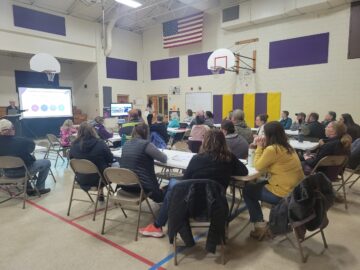
The Westfield School District hosted 12 community and staff meetings prior to their referendum, drawing more than 60 attendees to help shape the proposal.
Transparency and dialogue with residents, both in person and online, was critical. The district hosted 12 community and staff meetings in late 2023 and early 2024, drawing more than 360 attendees. These sessions helped shape the referendum proposal and ensured that community voices were heard.
A district-wide survey conducted in April 2024 revealed strong support for a $27 million referendum, with 61.5% of respondents in favor. The survey also identified preferred communication channels – newsletters, local newspapers, the district’s website and Facebook – that became the backbone of Westfield’s outreach strategy.
Partnering with Findorff, the district launched a robust, multi-channel communications campaign. Over 30 digital and print pieces were distributed, including articles from Johnson, referendum information sessions, newspaper ads, mailings, e-newsletters, social media updates, and website FAQs.
Visual storytelling played a key role, as did efforts to reach residents with no ties to the school system, accounting for 70-75% of eligible voters. For example, rather than simply stating that the pipes at school facilities were corroded, Johnson and other district leaders attended community events and displayed real samples of the school’s corroded plumbing. Many of these events provided residents without school-age children with first-hand understanding of the urgency of these improvements. Visually impactful tools like a corroded pipe offered a tangible, impactful message.

Real samples of Westfield’s corroded plumbing.
“Our focus with engagement was to help people see the role they play in our school system,” said Johnson. “Schools are a part of the economic health of the community, and we need all stakeholders to remember the value we bring to them regardless of their connection to our district.”
On election day, the results spoke volumes. In its first successful referendum in three decades, Westfield’s question passed with 62% of voter approval, marking a historic victory for the district.
The district credits its success with launching a campaign rooted in authenticity and responsiveness. The board proactively met residents where they live, congregate and scroll, ensuring that the right messaging reached the most people.
Today, construction is underway at Coloma, Oxford and Westfield elementary schools, along with the Westfield Area Middle/High School. The district continues to share progress updates through its website, ensuring that transparency remains a cornerstone of its relationship with the community. The Westfield project stands as a testament to the power of strategic communication, community engagement, and perseverance.
Jefferson: Framing a brighter future
The School District of Jefferson faced a different set of challenges: significant operational and facilities needs, declining enrollment and historic facilities with sentimental value for the community. The district, which serves 1,600 students across five schools, identified urgent facility needs that required costly repairs and upgrades. With mixed referendum results in the past, community engagement would be the key to success.
In 2022, Jefferson launched its “Framing Our Future Facilities” initiative, forming a Facility Advisory Committee comprised of 17 members representing a broad cross-section of the community. Findorff led the initial facility assessment, followed by collaboration with EUA for option development and long-range planning. Early survey data revealed strong support for the proposed improvements, signaling an optimistic future.
Construction needs were ambitious and far-reaching, touching all five schools in the district: Jefferson High and Middle Schools, East Elementary, West Elementary, and Sullivan Elementary. Proposed work included:
- Enhancing security at main entrances and fire alarm replacements for improved student safety.
- Upgrading and repairing several failing and inefficient building components.
- Modernizing learning environments with new high school agriculture and technical education labs to support hands-on learning.
- Renovating classrooms for more dynamic and flexible instructional environments.
The renovations were particularly complex and had to be mostly executed during the school year. This included 57,200 square feet of renovations at East Elementary, an early-20th-century building with deep historic significance to the community. Findorff assisted in developing a phased plan to ensure students’ safety and success were not negatively impacted, underscoring the need for careful planning and coordination behind these types of projects.
Like Westfield, Jefferson changed superintendents during the planning phase. In this case, a four-month long exit strategy facilitated a seamless transition. Charlie Urness, the new superintendent became the “face” of the campaign, leading community meetings, attending workshops, and speaking directly to residents. Highly visible leadership instills a sense of confidence, transparency, and partnership with the community, but broader district involvement is essential, too. Steady, engaged involvement by school board members, administrators, and principals helps amplify messaging, spread awareness, and build trust.
“We incorporated the phrase, Strong Schools = Strong Communities, into our presentations and communications,” said Urness. “The equal sign is vital because the statement/equation works both ways.”‘
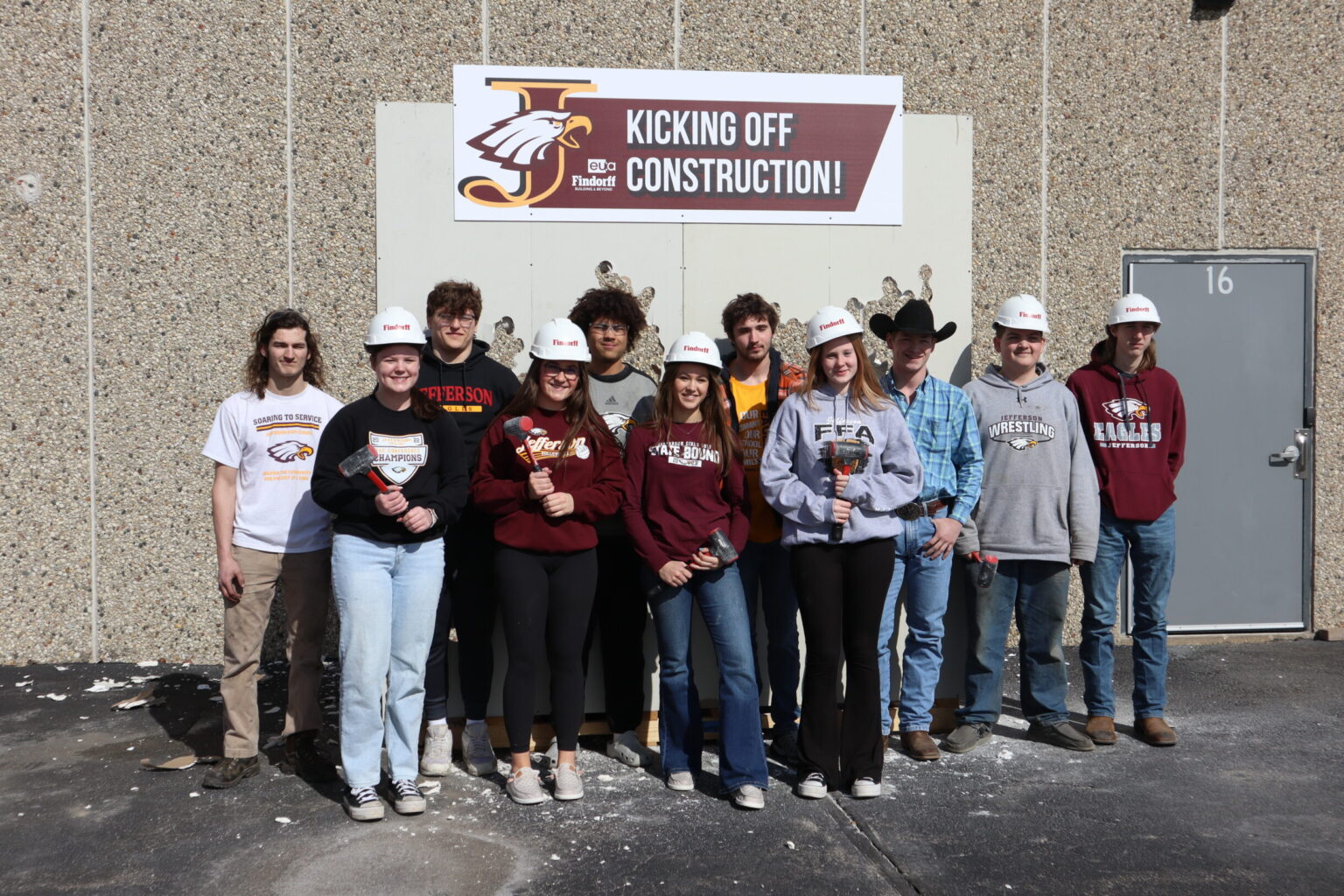
The district’s extensive planning and communications strategies were a success. The referendum passed in November 2022, allowing construction to kick off in March 2023.

Students participate in the wall smashing event to kick off construction at Jefferson High School.
Jefferson’s outreach strategies weren’t a means to an end — they were the beginning of an ongoing conversation. After the referendum passed, the district continued informing the community with project updates to show how it had faithfully delivered on its promises and was investing taxpayer funds judiciously.
Another way in which Jefferson continued its community outreach was by involving students in the construction itself. By inviting students to participate in facilities demolition, site tours and other engaging activities, it helped students learn about the unique needs of educational infrastructure and encouraged the next generation to consider a career in the trades.
A blueprint for success
Both districts’ experiences illustrate how facility assessments are an essential first step in strategic planning and fostering community trust. For rural (or any) districts embarking upon their own referendum journeys, consider the following recommendations:
- Start with data. Assessments reveal urgent needs, guide prioritization, and provide vital information for future communications. Surveys reveal insights into the level of community support.
- Engage the community. Transparent conversations build support and shared ownership. Hold open houses. Attend local events and meet people, including those outside of the school system. Learn where residents congregate online, and share information there, too.
- Leverage partnerships. Experts in construction, architecture, finance, and demographics provide critical insights. Consider hiring a district communications professional to help manage external messaging and strategy, long before a referendum.
- Adapt to change. Leadership transitions are inevitable — continuity comes from clear vision and local commitment. Make smart choices to avoid disruption.
As districts across Wisconsin look to the future, the stories of Westfield and Jefferson offer a powerful reminder: with the right tools and voices at the table, even the most rural communities can achieve lasting progress and help support the next generation.
Erika Freeman is director of education market client services at Findorff. She can be reached at efreeman@findorff.com.