
Connecting K-12 Leaders to AI Innovation
Preparation is an underlying, constant theme in the school world. Educators prepare students for the upcoming quiz, the state test, the next grade, and beyond. Leaders prepare educators for changes in the school building. And when new technologies and new trends emerge, districts flow these things into an existing question: How do we continue to prepare students for the future?
AI is rapidly advancing and shaping not only our day-to-day lives, but entirely new jobs. It’s coming into conversations about career readiness and understanding what skills the next generation needs to hone and develop. Districts are often considering and implementing brand new AI policies while simultaneously continuing to assess how to best set students up for success.
These are big topics for a sole superintendent or district leader to work through, let alone “solve.” But coming together, joining other leaders who are facing the same questions and uncertainties, and witnessing innovation firsthand can help make the future of AI feel more tangible and clear.
Facility Field Trip to Morgridge Hall
On September 23, district leaders across Wisconsin joined the Findorff Facility Field Trip as part of the 2026 Wisconsin Association of School District Administrators (WASDA) Fall Conference. The field trip toured Morgridge Hall, home to the University of Wisconsin–Madison’s brand-new College of Computing & Artificial Intelligence (CAI).
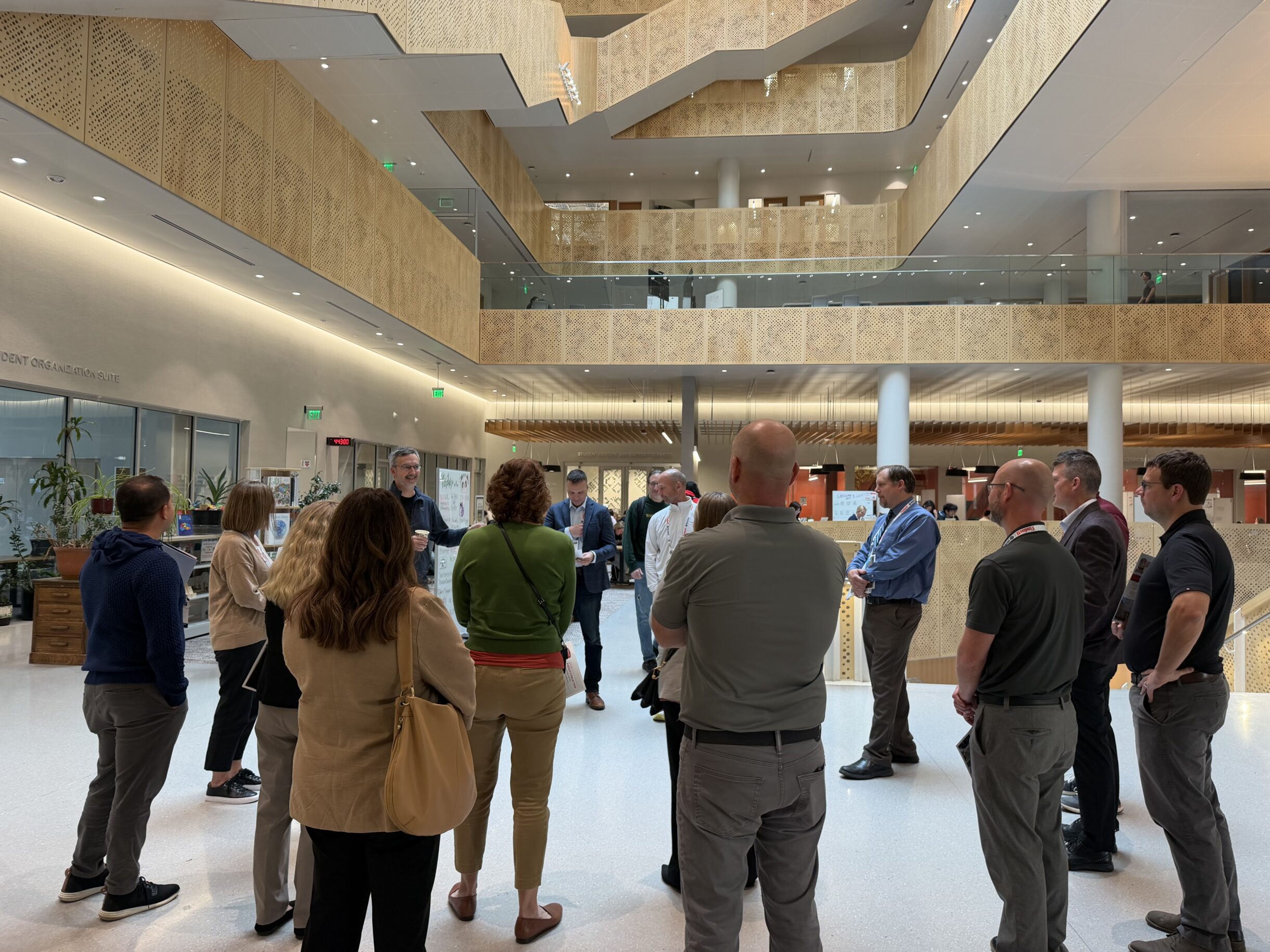
Attendees listen to Dean Remzi Arpaci-Dusseau.
Guests learned about CAI’s mission and creation, as well as heard insights on AI in education and emerging trends. The tour offered a behind-the-scenes look at spaces that are designed to encourage collaboration, innovation, and new discoveries, and great discussion ensued with CAI Dean Remzi Arpaci-Dusseau.
In talking about preparing students for higher education and the impacts of AI on learning, Arpaci-Dusseau shared that students still need to be curious and willing to struggle to solve problems, and they shouldn’t rely on technology to answer all their questions. Arpaci-Dusseau also reinforced that educators can learn from students, and that he consistently learns from his own.
When asked what K-12 schools should be teaching students to succeed with AI and computing, Arpaci-Dusseau’s answer was straightforward: the fundamentals. Reading and writing are so critical to a student’s success, regardless of what the computing needs may be.
About Morgridge Hall
Morgridge Hall is a 343,000-square-foot, seven-story facility that is dedicated to computing and AI. With more than 1,000 classroom seats, 300+ offices, flexible learning spaces, and tech labs, Morgridge Hall is a hub for research, learning, and collaboration. But the facility is not just unique for housing a one-of-a-kind, tech-centric college. “This building is the most sustainable academic building on campus,” says Cindy Torstveit, Associate Vice Chancellor of Facilities Planning & Management at UW–Madison.
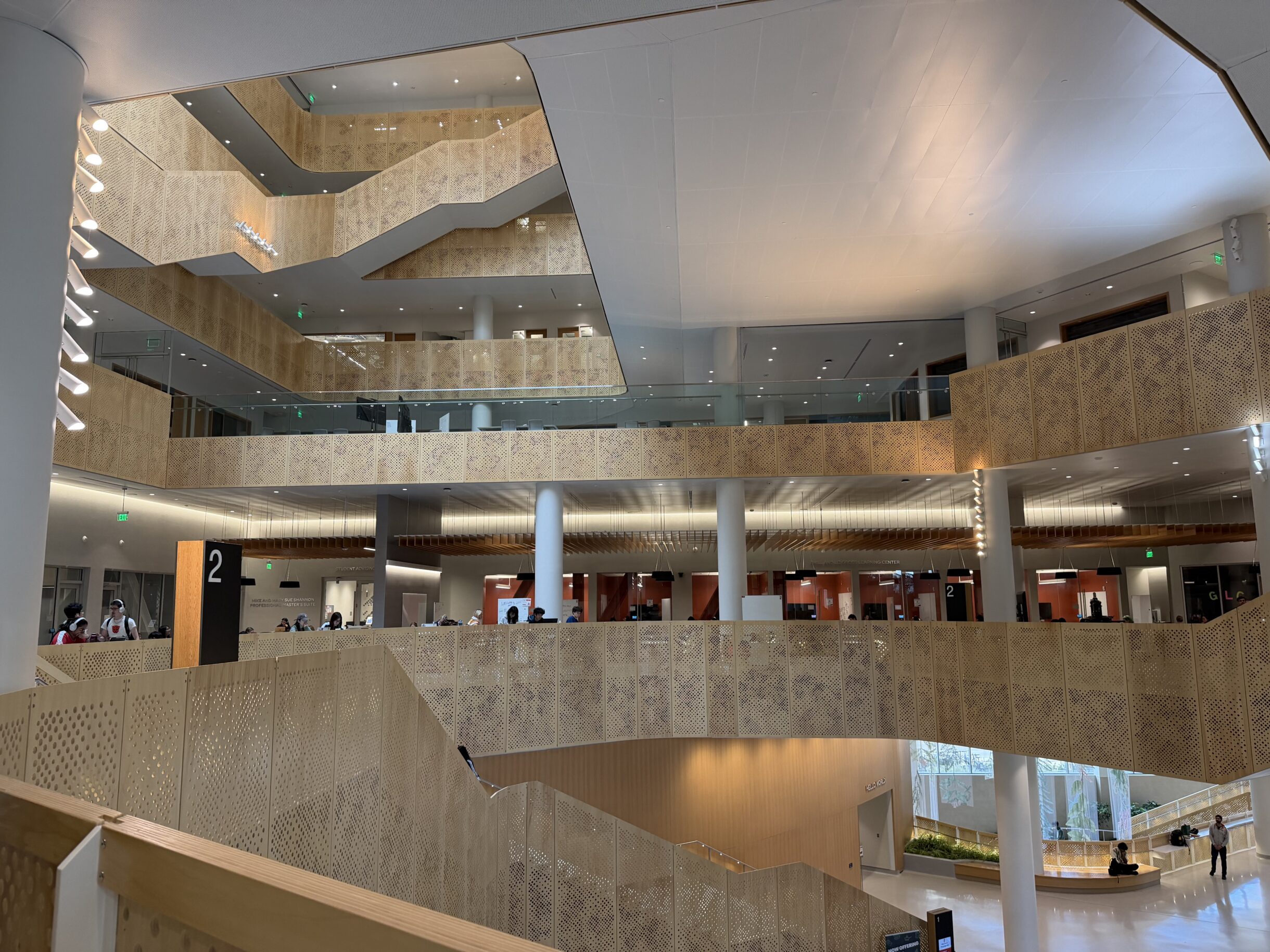
Morgridge Hall achieved LEED v4 Platinum in 2026, a testament to its sustainability.
This is intentional, as the very fiber of Morgridge Hall is rooted in innovation and serving future generations. Sustainability features of the building are as forward-thinking as the programs offered within its walls. A stormwater retention system for plant irrigation and toilet flushing plays a significant role in reducing about 30 percent of indoor water use. Intentional design with lighting reduces about 60 percent of energy consumption, and more than 300 solar panels help offset energy costs. Visitors often comment on how “green” the building is in a more literal sense: 25 percent of the site area is covered in plants, the majority of which are native to Wisconsin.
Earlier in 2026, Morgridge Hall received recognition for its sustainability, achieving LEED v4 Platinum certification — the highest LEED achievement possible. Morgridge Hall is a testament to not just preparing students (and the building itself) for the future but rather embracing it.
While questions about AI will inevitably remain, continuing conversations and exploring real-world applications helps district leaders — and all of us — prepare for the future and know what’s possible.
Learn more about Morgridge Hall and Findorff’s sustainability initiatives.
Hero image by Bruce Damonte